Kantiv Vs. Loopio
Upgrade to the pursuit intelligence platform purpose-built for AEC.
Kantiv unifies your firm’s structured and unstructured institutional knowledge across proposals, project narratives, resumes, and client history into a pursuit intelligence platform that surfaces the right expertise when it matters. No manual tagging. No rigid step-by-step workflows.


Considering Loopio? Here's what Loopio wasn't built to do.
Here’s what Kantiv does instead.
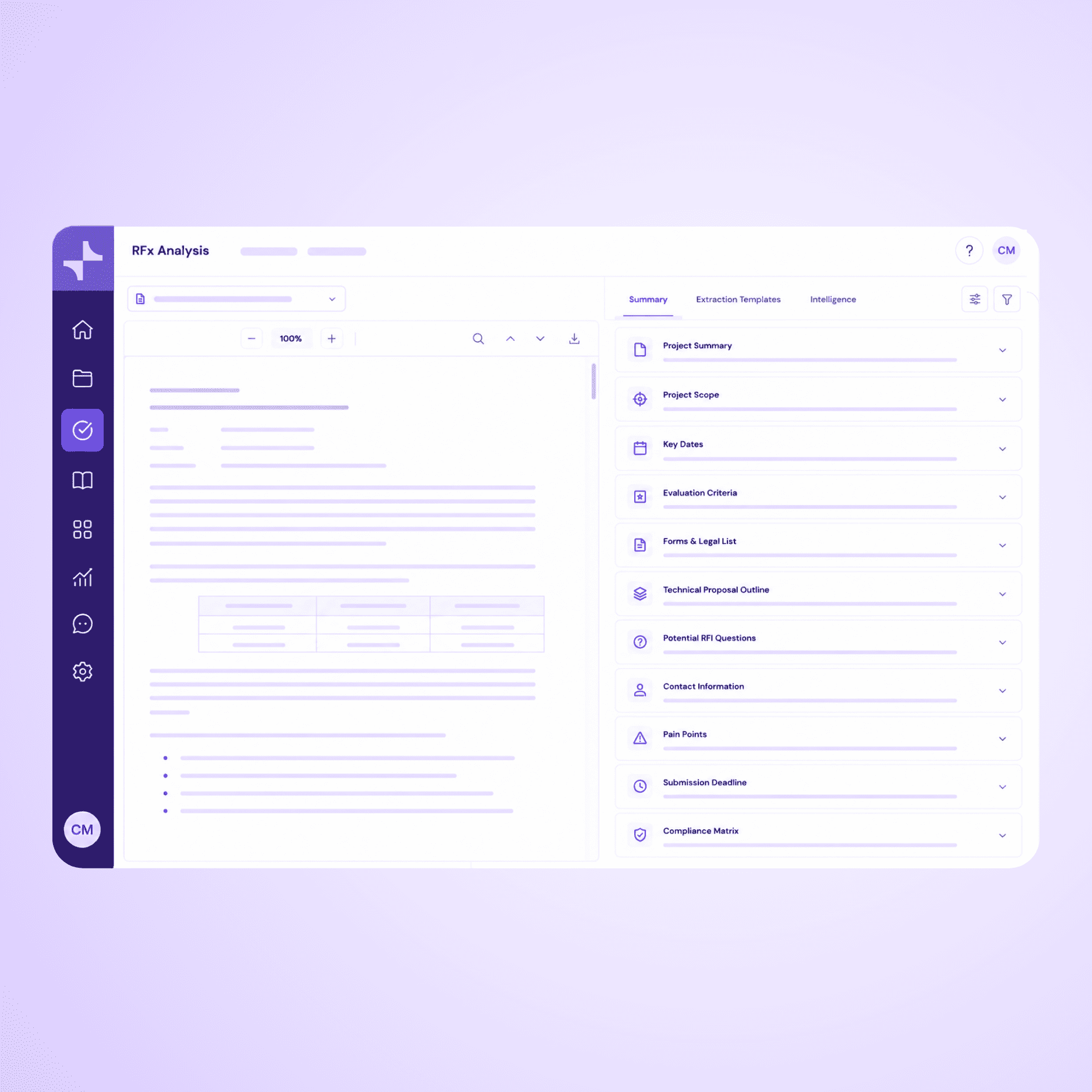
Win Strategy
Know exactly how to position your response before you write a word.
Kantiv analyses every RFx requirement and surfaces the past projects with the strongest proof points for this specific opportunity. Your team sees what to lead with, what to reuse, and where your firm's experience is most compelling.

First Draft
A first draft built from your firm's strongest past work.
Kantiv structures the proposal response around your most relevant past projects, pulling content and proof points directly from your knowledge base. Every section is sourced and traceable, so your team isn't writing from scratch or guessing which project to cite. Contributors add their sections in the platform. When the draft is ready, drag assets straight from your image library into InDesign.
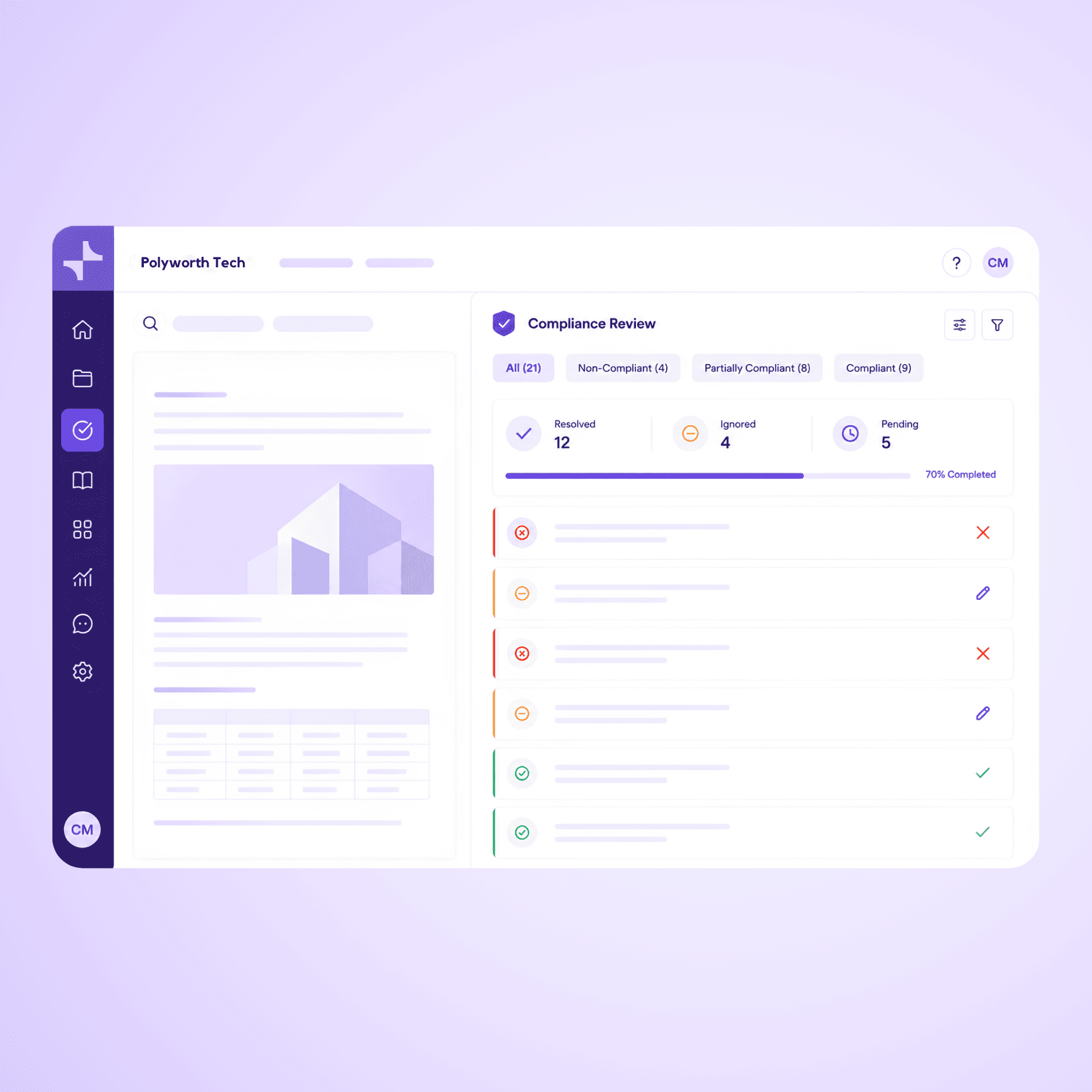
Compliance Check
Every RFx requirement, checked before submission.
Kantiv runs a compliance check against every requirement in the RFx before your team submits. Every unaddressed requirement is flagged. No last-minute scrambles. Submit with confidence, every single time.
Compare
Feature-by-feature objective comparison
Kantiv is purpose-built on an AEC data model that understands the relationships between your people, your projects, your clients, and your pursuits. Loopio is built for generic RFP response volume. The table below shows what that difference looks like in practice.

AEC-specific knowledge graph (People, Projects, Companies, Opportunities)
Yes
Generic Q&A library. No relational model connecting people, projects, clients, or pursuits.
Automatic content extraction from existing AEC documents (InDesign, Word, PDF)
Yes
No. Manual content entry, tagging, and library organization required.
Semantic search across project portfolio, resumes, and visual assets
Yes
Limited. Keyword and pattern-matching search within Q&A library. No semantic search across project portfolio, resumes, or visual assets.
Flexible, non-linear workflow (start anywhere, jump between tasks)
Yes
Structured linear workflow designed for sequential RFP response. Not built for non-linear AEC pursuit workflows.
Image management and intelligence (auto-tagging of images, search by what’s in the image, and more)
Yes
Images can be embedded in answer entries, but no image intelligence, auto-tagging, reverse image search, or usage tracking.
Auto-updating knowledge base, without the need for manual library maintenance
Yes
Requires constant manual curation. Setup takes months before the library returns consistently high-quality matches. Ongoing admin overhead is significant.
AEC-native document types (SOQ, SF330, project sheets, resumes)
Yes, built for AEC formats
General questionnaire focus. Supports Word, Excel, PDF, and web-based procurement portals. No AEC-specific document formats.
Multi-project, concurrent pursuit support
Yes, built for overlapping pursuits with a connected knowledge base.
Handles multiple concurrent RFP projects but without connected intelligence across them. No shared knowledge between overlapping proposals.
Project lifecycle tracking (Opportunity → Won → Project → Portfolio)
Yes
No. Tracks RFP projects and content usage only. No business development lifecycle tracking.
AI-powered document review and style compliance
Yes
AI answer scoring and confidence indicators within the Q&A library. No style guide compliance checking against firm-specific standards.
Resumes and project sheets connected to people, clients, and opportunities
Yes, automatically
No. Content lives as flat entries in the library. No people or project entity model.
Industry focus
AEC-exclusive
Horizontal. Serves enterprise sales, security, and proposal teams across all industries.
Testimonials
So do our customers.
Our team uses Kantiv every day. I can't imagine leading a proposal without it.

Kantiv allows us to show up differently in the proposal process, not just as information gatherers, but as strategists.

If we tried to get rid of Kantiv now, we'd have a revolt. Our team members love it and rely on it daily.