
Found the content on this page useful? Share it with your team!
What Amplify A|E|C 2026 Taught Us: Borrow the Playbook, Not the Playbook's Industry

.png)
Table of Contents

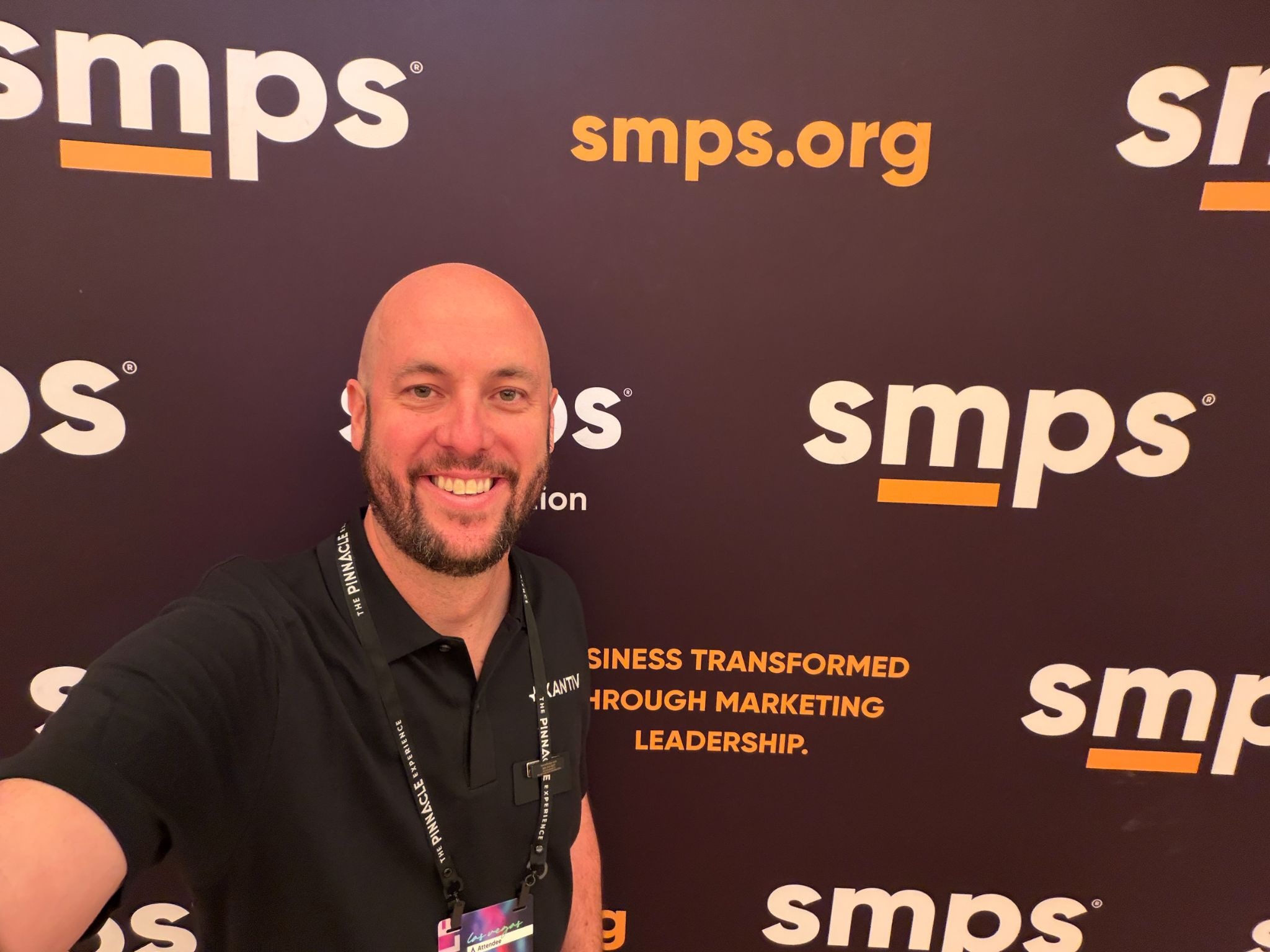
Amplify A|E|C, SMPS's 47th annual gathering, just wrapped in Las Vegas and it was Kantiv's first major event since our rebrand. Our booth turned into one of the more talked-about spots on the floor, with a puppy petting corner next to a Wizard of Oz–themed Christian Louboutin drawing. But I still managed to sit in on as many sessions as three days would allow.
Something stood out for me as a theme over several sessions: the best ideas for moving AEC marketing forward can come from outside AEC. Ideas from a former digital strategist for Beyoncé. From Patagonia, Amazon, Lego, and Disney. From an astrophotographer who once talked an airline crew into banking mid-flight so he could capture the perfect eclipse shot.
Nobody unveiled a brand-new AEC-native tactic. Instead, the theme that kept popping up for me was simpler, and a little uncomfortable: our industry is different, but the humans making the decisions in it are not. The firms pulling ahead aren't inventing a new playbook from scratch. They're stealing from the brands that already do this well, then translating it for our world.
Stop marketing to demographics
Dr. Marcus Collins opened the conference by going after one of marketing's oldest habits of segmenting people by demographics. His argument is that demographics like age, geography, and title are "hardware." Statistically tidy, but they don't predict behavior. What actually predicts behavior is "software": a person's identity, beliefs, and the social circles they measure themselves against. His litmus test is worth stealing for your next strategy: do people like me do things like this?
That reframe matters a lot for B2B and B2G buying. Collins pointed to research done by Bain alongside LinkedIn suggesting that roughly half of B2B buying influence sits with people who are non-experts (i.e., people who never read the white paper and are going purely on gut feel and brand affinity). He also named something every AEC marketer has felt but rarely says out loud. That buyers often pick the safer, established firm not because it's better, but because it's easier to defend internally if the project goes sideways. Familiarity is a risk-management tool as much as a preference.
He closed with an idea that echoed through the rest of the conference: as AI takes over more of the "engineering" of marketing—the task execution, the drafting, the data-crunching—the human value shifts toward "artistry." Discernment, empathy, actually knowing your client instead of just having data about them.
The stat that you should know
If Collins set up the idea, Tim Asimos's session, B2C to AEC: Consumer Brand Habits Every AEC Marketer Should Adopt, put it into direct practice—and it came loaded with the best stat of the conference:
Client Experience accounts for roughly 78% of AEC buyer decision-making. Technical expertise accounts for just 22%.
Yes, your company is incredibly talented and has the technical expertise chops to get the job done and done well. But, the majority of the time, so can your competitors. The thing most proposals lead with, the technical qualifications, is, according to this research, the smaller half of why firms actually win.
Asimos also ran through five habits you can borrow straight from consumer brands:
- Patagonia's insistence on authenticity over invented differentiation
- Lego's ecosystem-building that creates demand before anyone issues an RFP
- Amazon's obsession with removing friction
- Disney's engineered (not accidental) experience designf
- The distinction between repeat business and actual loyalty—which, counterintuitively, often gets built by how well you recover from a mistake, not by never making one.
The line that I loved: AEC professionals love to say "our industry is different." His answer is the industry is different, but the humans are not.
Borrowing works for leading your team too, not just your clients
Two sessions took the same instinct and pointed it inward. Elise Mitchell's Pinnacle Experience session used a motorcycle metaphor "looking through the turn." Riders who fixate on a hazard steer straight into it, but the ones who keep their eyes on the destination while staying aware of it make it through. She paired that with a "toward vs. away" mindset (away triggers a threat response and narrows thinking, while toward triggers curiosity and opens it up) and a simple three-step framework for leading through chaos: what's happening, so what, now what.
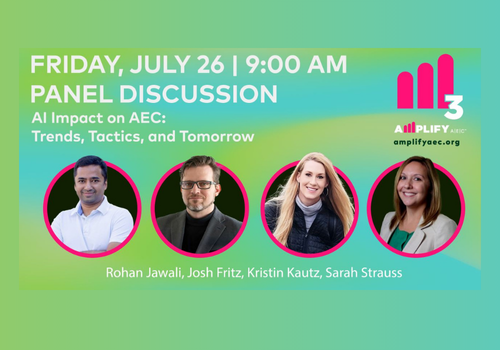
The AI Change Management panel picked up nearly the same thread from a different angle: AI adoption in AEC firms isn't a technology problem, it's a change management problem, and staff move through something close to the stages of grief before they land on acceptance. The practical fix was running tight 6-week pilots instead of over-engineering (and inevitably stalling) a rollout. And a live poll of the room delivered a stat worth sitting with if you're benchmarking your own firm: only 5% of firms called themselves "fully arrived" on AI adoption, and 60% put themselves at "early infancy."
Both sessions circled back to Collins's artisan-vs-engineer framing from the keynote. As AI absorbs more of the execution, the marketer's real value shifts from production to judgment—from order-taker to strategic advisor.
I wasn't the only one thinking this way
A few sessions I didn't catch live but heard plenty about reinforced the same idea from other angles. Deirdre Booth and Emilie Austin's Trendjacking the Moment: TSwift, the Louvre Heist & A/E/C Marketing took "borrow from outside the industry" about as literally as it gets — using real-time pop culture moments as a lens for AEC relevance. And our friends Tyler Chartier and Josh Miles asked Did Video Kill the Photo Star?, a nod to the industry's shifting content formats borrowed straight from the broader media world's own reckoning with video.
Even the closing keynote kept the pattern going. Jon Carmichael, the astrophotographer behind the viral eclipse photo shot from a plane window, closed the conference with Make It Count, a talk people are still talking about. SMPS opened Amplify with an outsider from pop culture strategy and closed it with an outsider from astrophotography. Even the conference's own programming made the case for looking outside the industry for the next good idea.
The takeaway
Every session above came at it from a different angle—buyer psychology, client experience, change leadership, AI adoption—but they were all making the same point. The next great AEC marketing idea probably isn't waiting to be invented from scratch inside our industry. It's already been proven somewhere else, and it's sitting there, ready to be translated. That's the actual job now: not reinventing the playbook, but having the discernment to recognize a good one and make it ours.

.png)