Found the content on this page useful? Share it with your team!
What the SMPS Q2 AI Report Means for AEC Pursuit Teams

.png)
Table of Contents

The SMPS Foundation just published its AI Quarterly Insight Report | Q2 2026, and there’s tons of great insight in it. I went through the whole thing and pulled out the findings that change how AEC marketing and pursuit teams should be operating right now.
A few findings stood out, and they all point in the same direction.
Agentic AI for proposals is now the mainstream expectation, not the edge case. This was the single highest-scored trend in the entire AI section of the report. It describes AI agents executing multi-step proposal and content tasks on their own, with people directing the work rather than doing it by hand. If your firm is still thinking about AI as a faster way to write one paragraph at a time, the rest of the market has already moved past you.
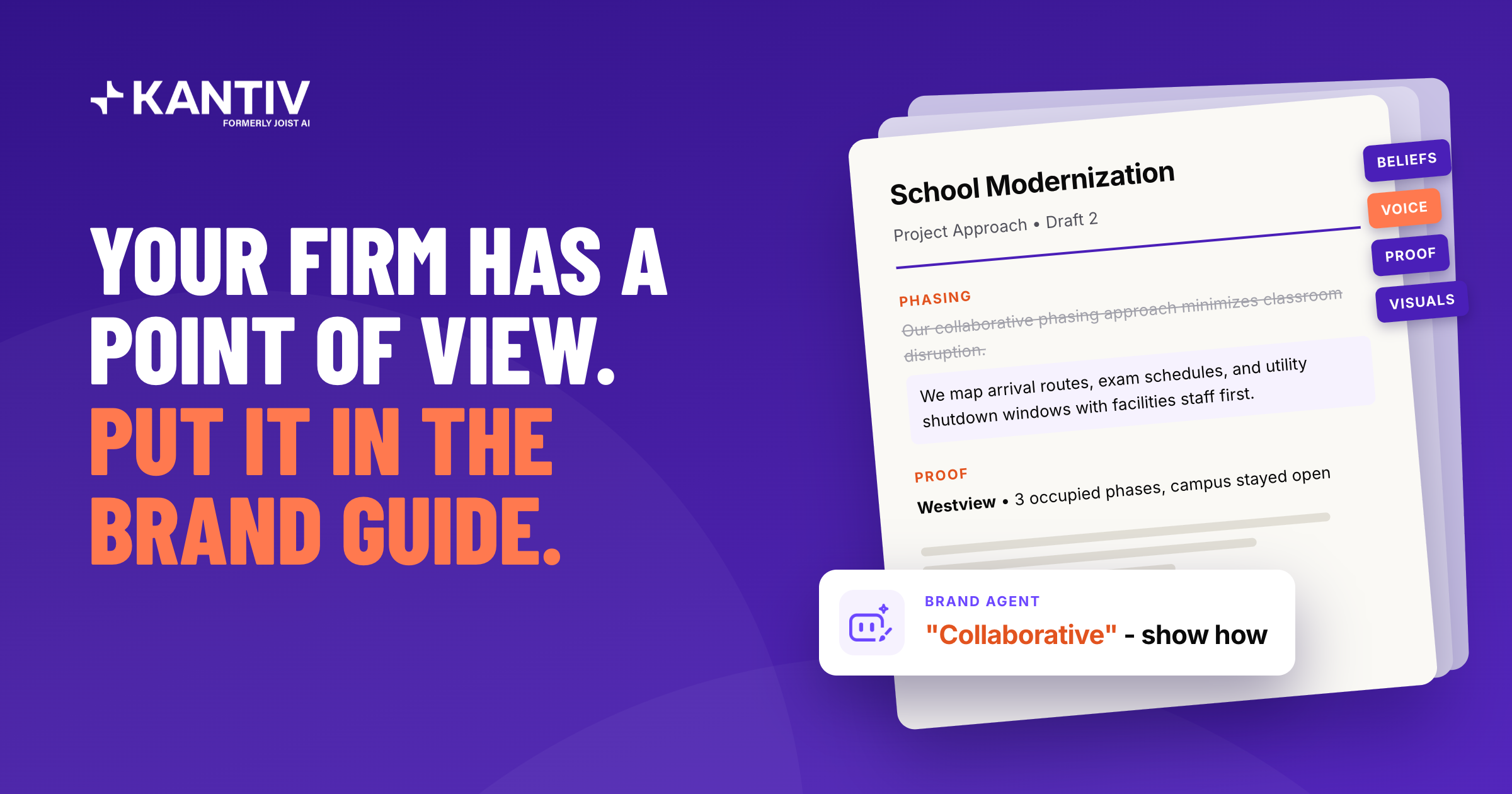
The “AI slop” backlash is real, and clients can smell it. Selection committees and owners now recognize generic AI output on sight, and the report notes prospects are getting fifteen to twenty nearly identical AI-generated messages a day. The takeaway isn’t “use less AI.” It’s that generic inputs produce generic outputs. When the source material is your firm’s actual project history, real personnel, and documented outcomes, the result reads completely differently.
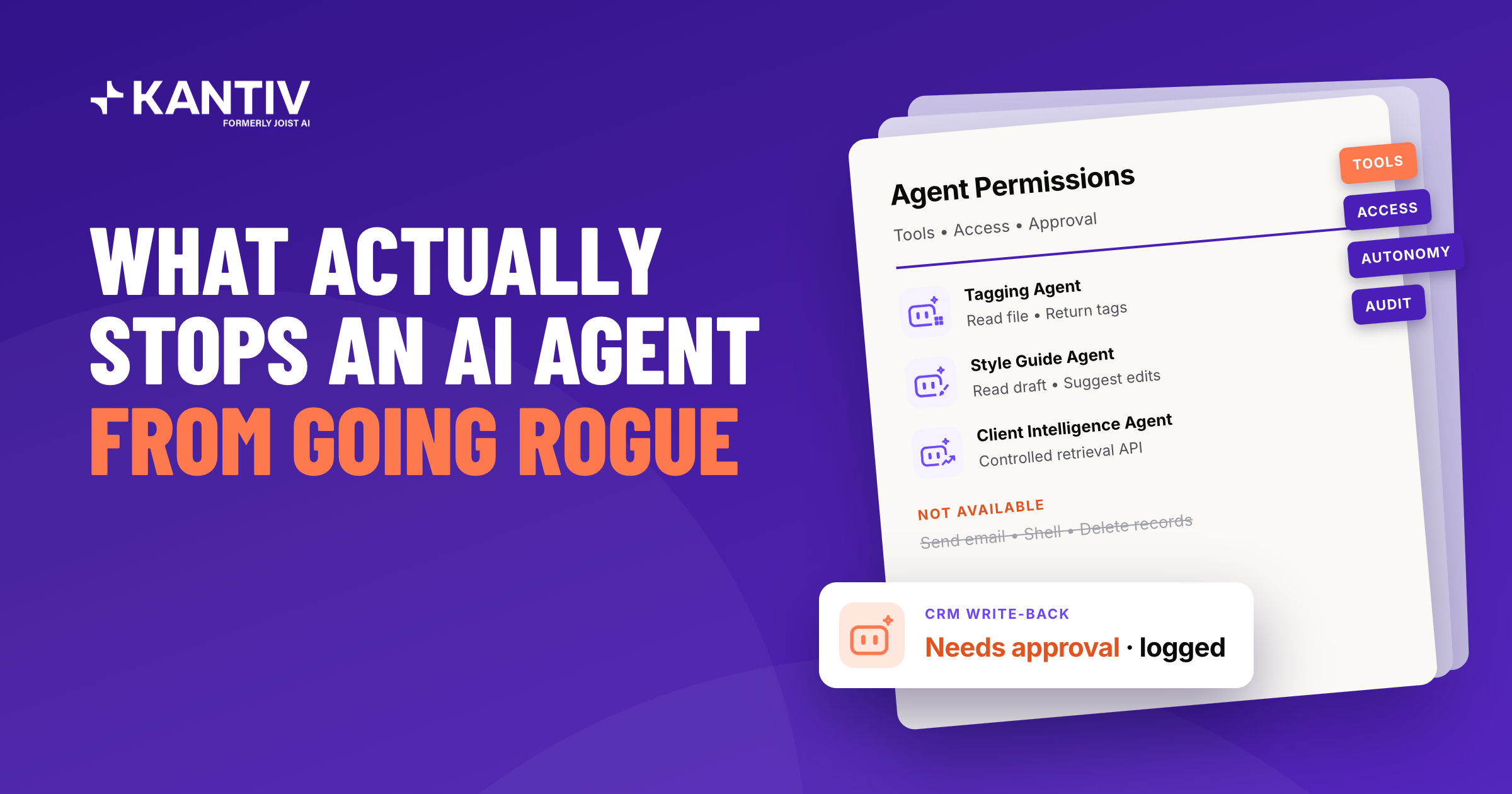
Your firm’s AI advantage compounds, but only if you build the infrastructure for it. The report calls this context engineering, and it describes exactly what most firms are missing: structured knowledge environments, capability files, project data taxonomies, win and loss intelligence. Firms that build this get smarter with every new model release. Firms that don’t start from scratch every time.
AI memory breaks down across a pursuit team. Today’s AI tools have personal, session-limited memory. The context a proposal writer builds in one session can’t reach the pursuit manager, the principal, or the designer. On a multi-month pursuit with a dozen hands involved, that means redundant work and inconsistent outputs. This is one of the most under-discussed problems in the report and one of the most familiar to anyone who has run a real pursuit.
Firms want fewer tools, not more. Teams are spending hours every week just managing integrations between disconnected systems, while paying marked-up prices for AI features bolted onto products that weren’t built for them. The appetite to consolidate is high.
What this means if you’re on a pursuit team
The conversation has shifted from “should we use AI” to “is our AI grounded in what makes our firm specifically credible.” Every finding above is really the same finding viewed from a different angle. Agentic workflows, the slop problem, compounding context, shared memory, consolidation—they all come back to one question: does your AI have access to your firm’s real institutional knowledge, in a structured and persistent way, available to the whole team.
That’s the category we’ve been building Kantiv around, and it’s the reason this report felt less like news and more like validation. The market is now naming the problem out loud. We call the answer pursuit intelligence: institutional knowledge that works across the full pursuit lifecycle, grounding the full benefits of AI in your firm’s actual history rather than the generic internet.
The full report is worth a read if you have the time, and the SMPS Foundation deserves credit for putting real practitioner data behind these signals. But if you only take one thing from it, take this: the firms that win the next few years won’t be the ones using AI the most. They’ll be the ones whose AI knows them the best.
The AI Quarterly Insight Report | Q2 2026 is published by the SMPS Foundation and is free for SMPS members. You can find it here: AI Quarterly Insight Report | Q2 2026. There is also a companion NotebookLM resource if you want to ask the report questions directly: Explore the report in NotebookLM.